Serena Baik, Senior Librarian, The New York Public Library
Ricci Yuhico, Managing Librarian, The New York Public Library
Creating a series-based program for Asian American Pacific Islander Native Hawaiian month for the first time was not an easily planned task for us. In February, our colleagues held a month-long series celebrating Black history, from job prep presentations about protected rights, to arts and crafts in traditional and digital mediums, to a concluding storytime that celebrated the accomplishments of Black people from the past to present. This marathon of programming was born not only from the skills and ideas of our fellow Black library staff, but also from the very real fact that our Teen Center, nestled in the transportation hub that is Midtown Manhattan, is largely patronized by teenagers of color from all over New York City, the surrounding counties, New Jersey and even other states.
With the success of Black History Month programming in mind, we decided to take a more careful approach to the way AAPINH month programming should take shape. As we all know, Asian America is a term that encompasses so, so much—even more so when including Pacific Islander Americans and native Hawaiians. Additionally, as Asian Americans who are ethnically from areas that are commonly racialized in the US as “Asian” (Serena being Korean American and Ricci being Filipino American), we further felt the weight of ensuring that we encapsulated as many representations of Asian Americans as possible in our programs.
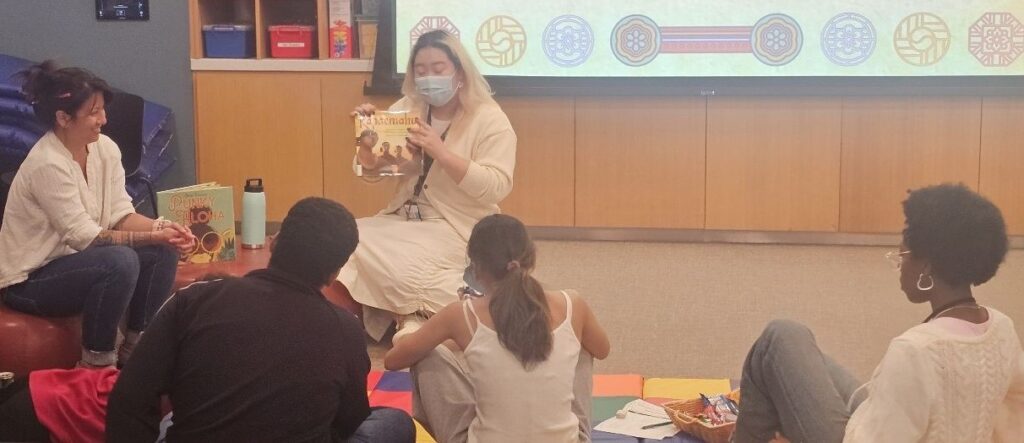
To that end, we settled on a weekly storytime “Once Upon a Time: Asian-American Story Hour.” Every Thursday focused on one or two regions of Asia through picture books written from that regions’ diaspora, followed up with a craft. This allowed us to pay homage to the writers, authors, and storytellers from different regions without necessarily speaking for them. The bulk of the pre-programmatic planning laid in researching which countries were attributed to specific regions and in sourcing the books.
We facilitated the following:
| Week | Region of focus | Picture Books |
| 1 | East & Southeast Asia | Rainbow Shopping by Qing ZhuangThe Most Beautiful Thing by Kao Kalia YangWhen Lola Visits by Michelle Sterling |
| 2 | Central Asia | The Most Beautiful Village in the World by Yutaka Kobayashi |
| 3 | West Asia | A Map for Falasteen by Maysa OdehWhere Butterflies Fill the Sky by Zahra Marwan |
| 4 | South Asia | The Many Colors of Harpreet Singh by Supriya KelkarHome Is in Between by Mitali Perkins |
| 5 | Pacific Islands & Hawaii | Punky Aloha by Shar TuiasoaKapaemahu by Hinaleimoana Wong-Kalu |
We easily found picture books written by East, Southeast, and South Asian authors, with books about Chinese and Korean voices the most common. We struggled the most with sourcing storybooks set in Central Asia within NYPL’s collection, and finally settled on The Most Beautiful Village in the World, written by Japanese author Yutaka Kobayashi about his experience losing contact with friends from different Afghan villages during the Soviet-Afghan War.
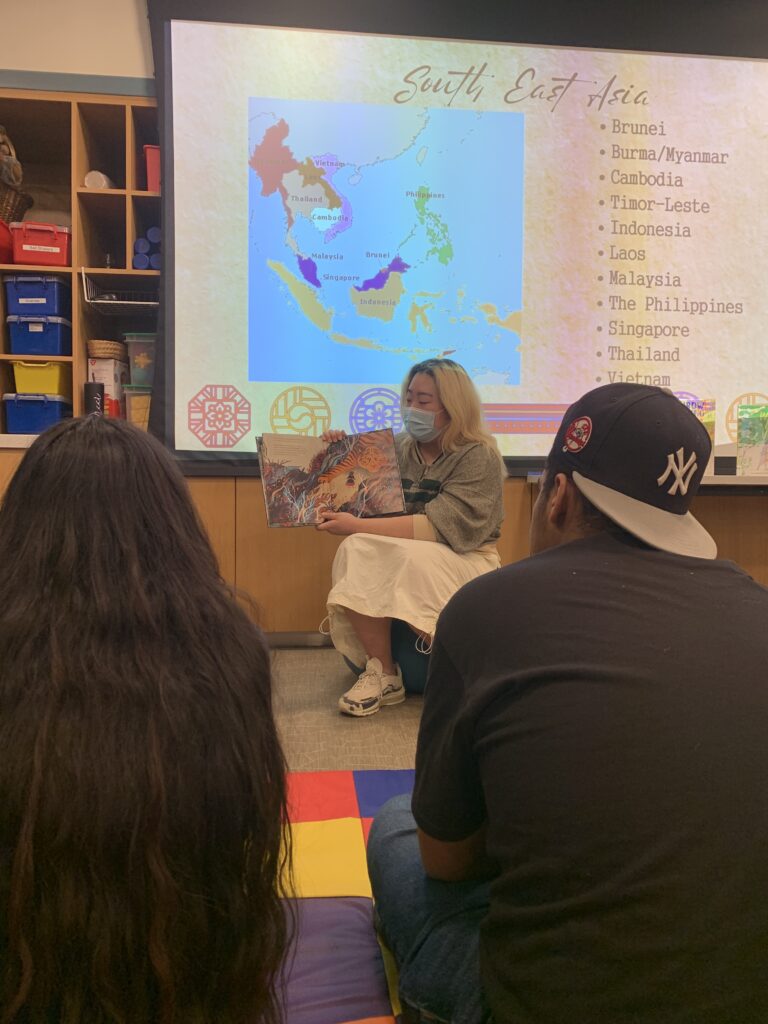
The program hit three simple beats. At the top, Serena provided an overview of which region we were highlighting. Since these programs were intended to be a survey of Asian American stories, not an educational presentation, we emphasized that we were not attempting to define Asian Americanism or a specific culture. However, because of the informal nature of a storytime and the teen audience, if the teens wanted to chime in we also made space for fruitful conversation.
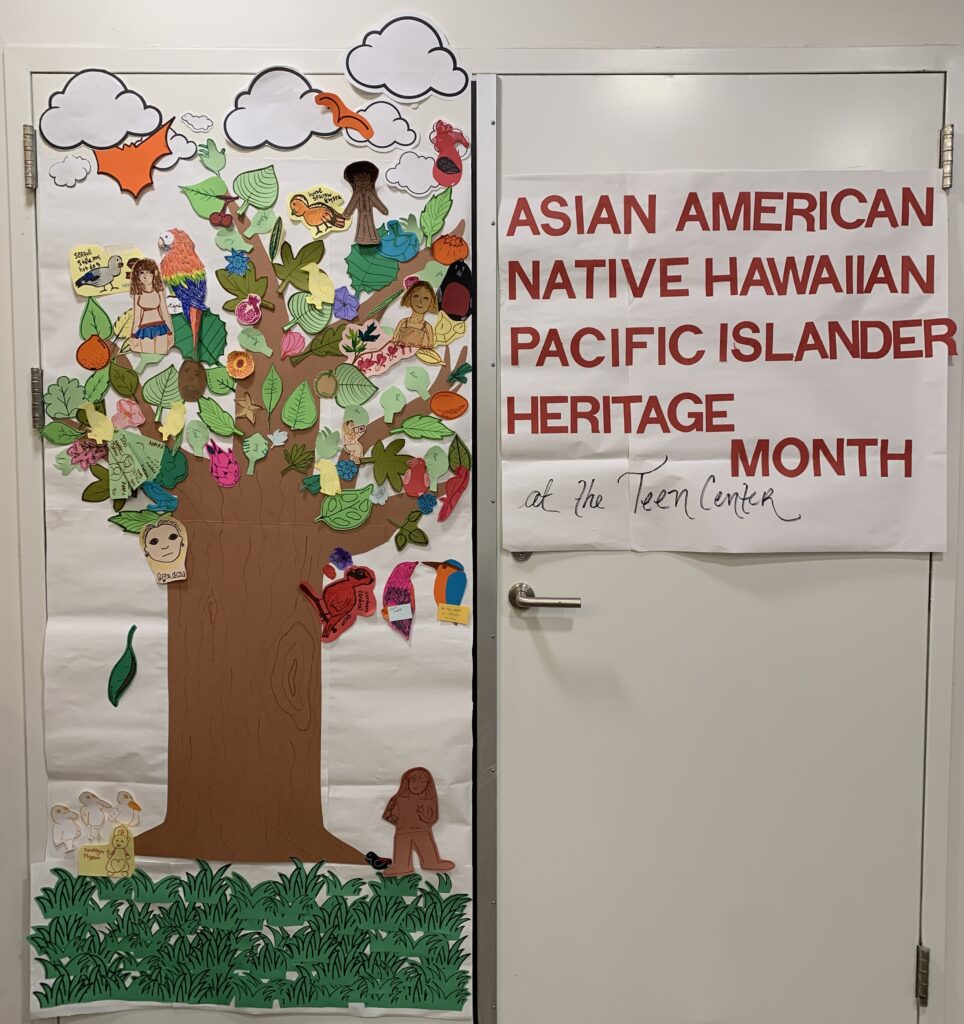
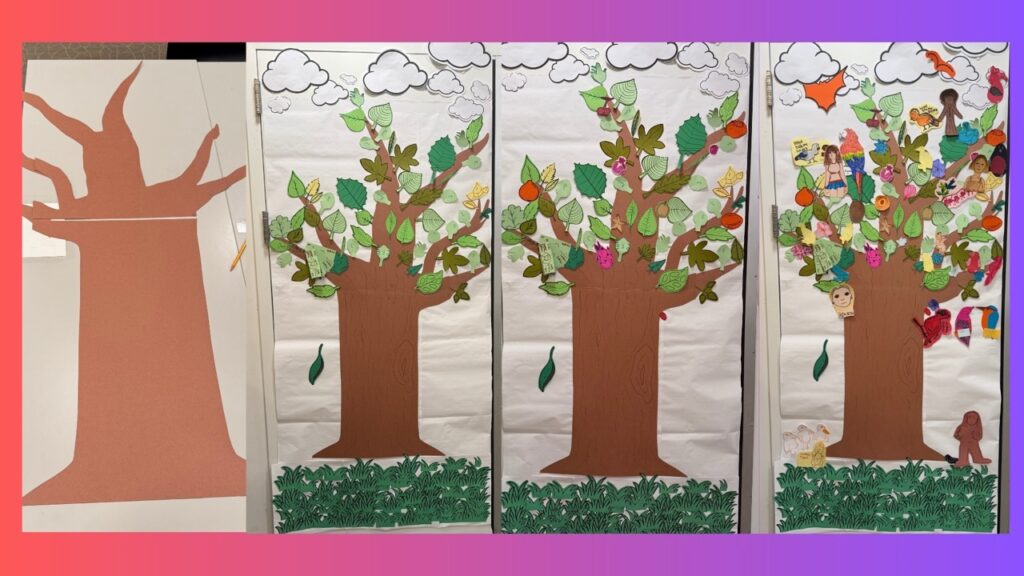
Similar to the idea of a community flag, the craft at the end of each storytime contributed to a “Community Tree.” Serena created the initial tree trunk and, prior to the story hours, our teen volunteer cohort contributed by cutting out copious amounts of grass and clouds during a volunteer meeting. After the storytime, attending teens were asked to draw a different addition for the tree: leaves, flowers, fruit, birds, and, finally, a self-portrait of themselves. Since not every teen attending was Asian American, we instead focused on promoting ideas of community and identity through individual drawings, which Serena asked the teens to also sign. While not a perfect metaphor, it was our way of acknowledging the complexities of Asian-American heritage and, quite frankly, the complexities of diaspora for any who live on the “hyphen.”
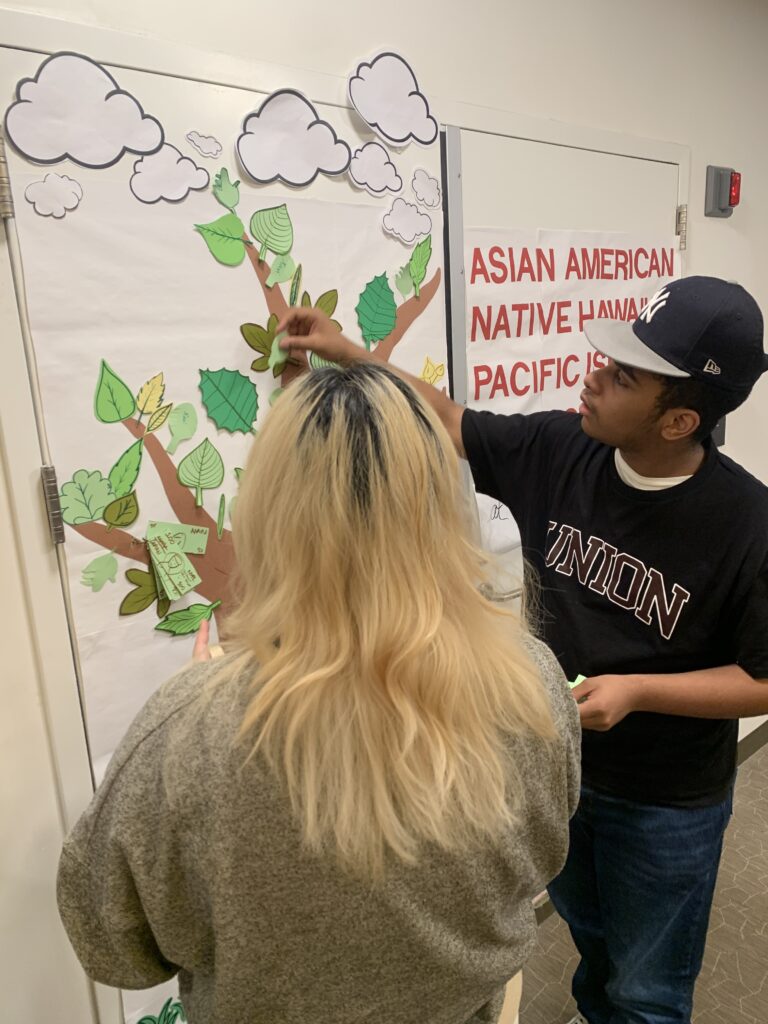
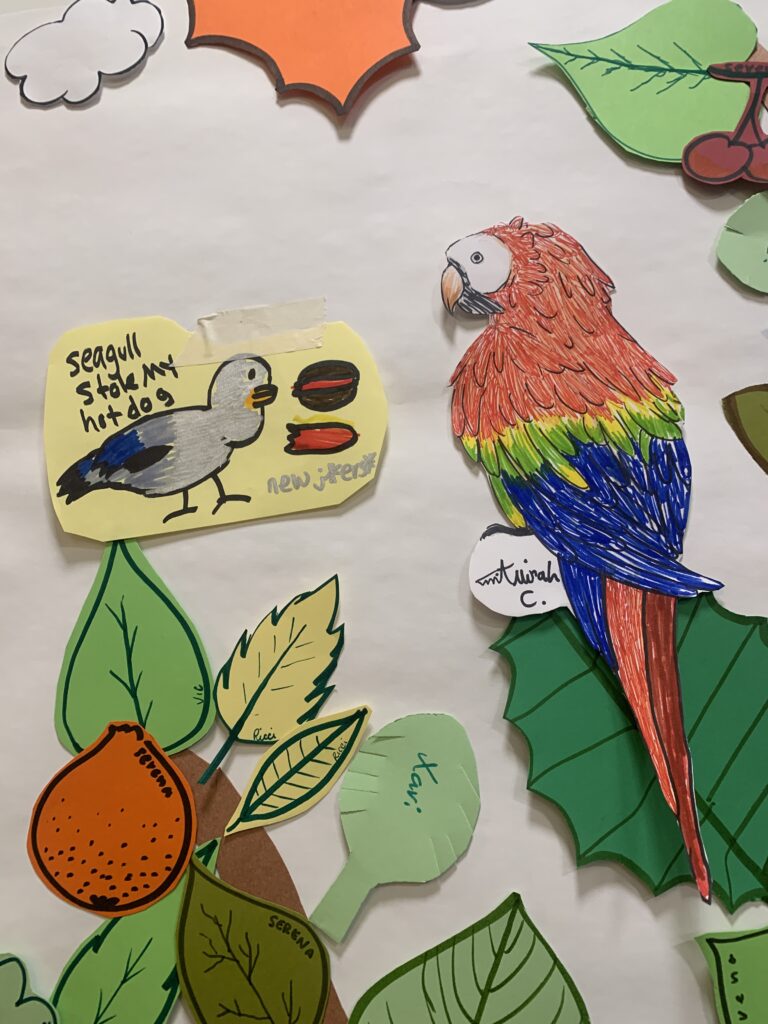
While storytime programs are typically reserved for younger audiences, one of Ricci’s favorite sayings is that a ‘good book has no age.’ The reception of this series was generally positive, with the teens showing appreciation for the stories. We also had discussions with them about the different ways Asian Americans from different backgrounds are, unfortunately, racialized, from exotic to undesirable.
Overall, though, as we had hoped, some heartfelt outcomes:
- The themes of the immigrant American experience felt relevant to the teens, even if they did not have roots in the culture the story focused on. When it came to reading The Many Colors of Harpreet Singh, protagonist Harpreet alternates his patka to colors representing his emotions. Two teens were thrilled to see its resemblance to the headscarves worn by Muslim family members.
- Teens who hadn’t attended programs previously participated and used the story hour as a break from the intense study season of AP exams.
- The cumulative art piece that will be displayed in the Teen Center until it needs to be refreshed.
We want to again thank our colleagues Corey Oliver, Jazmine Javier, Vic Kee, and Ruth Guerrier-Pierre for their work in creating the Black History Month programs and their willingness to try an intensive, community-based program series in the Teen Center first. Just as Asian American activists have been inspired by their peers in the diaspora to stand together under one label, we too have been and will continue to be inspired by the initiatives our colleagues do to promote diversity and reality within the otherwise fun and silly space we uphold as Young Adult librarians.
While we all have connections to our unique and complex backgrounds, true representation comes from the connections we make through and across each other. To another year of celebrating Asian, Pacific Islander, and Hawaiian American heritage in any and every way we can.