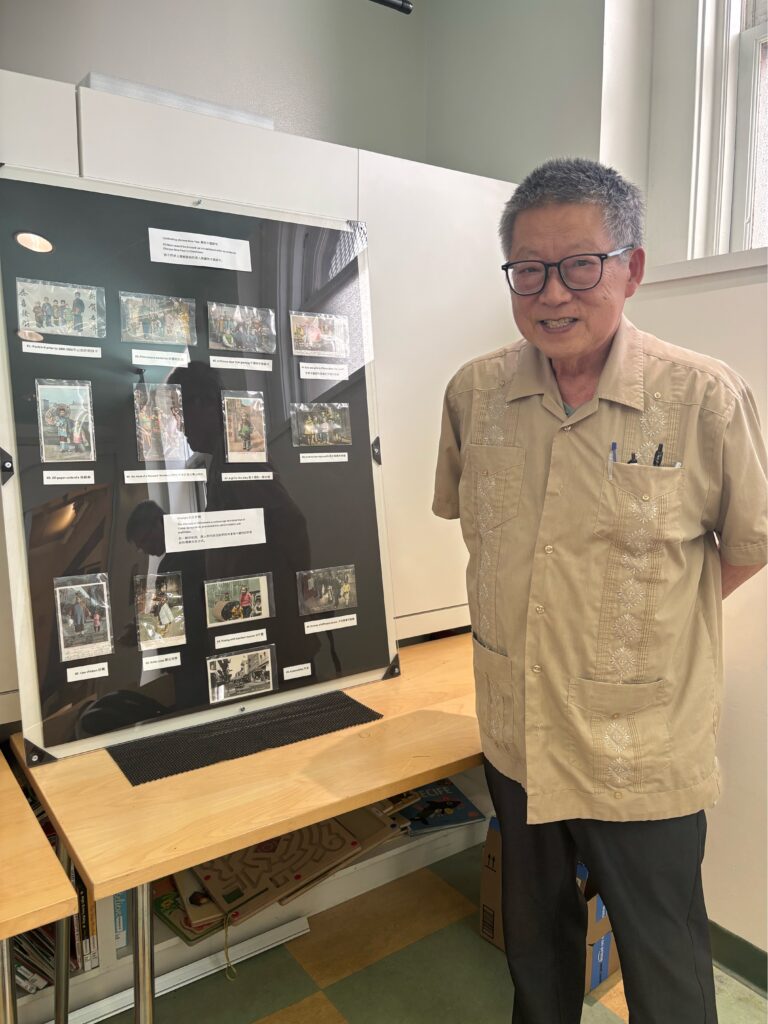
Herby Lam, a retired federal employee, immigrated to the U.S. from Hong Kong. He’s a multitalented and multifaceted person. A collector of postcards, stamps, and coins. An amateur historian. As a graphic designer, Herby designed a special Lunar New Year envelope for the United States Post Office, celebrating 2001, the Year of the Snake.
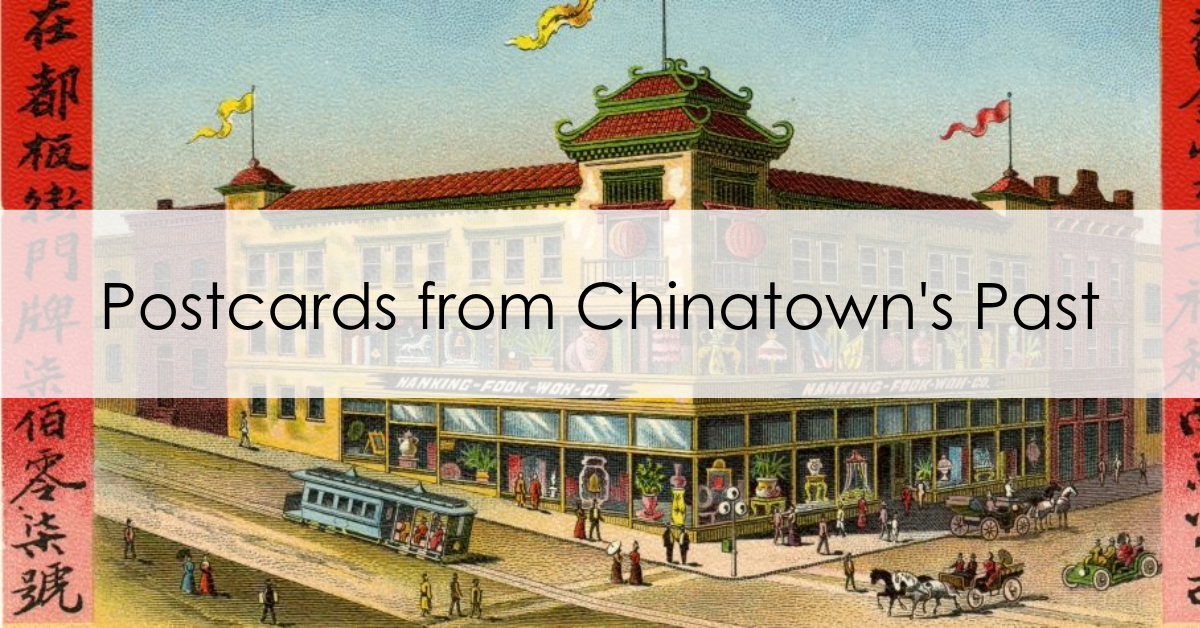
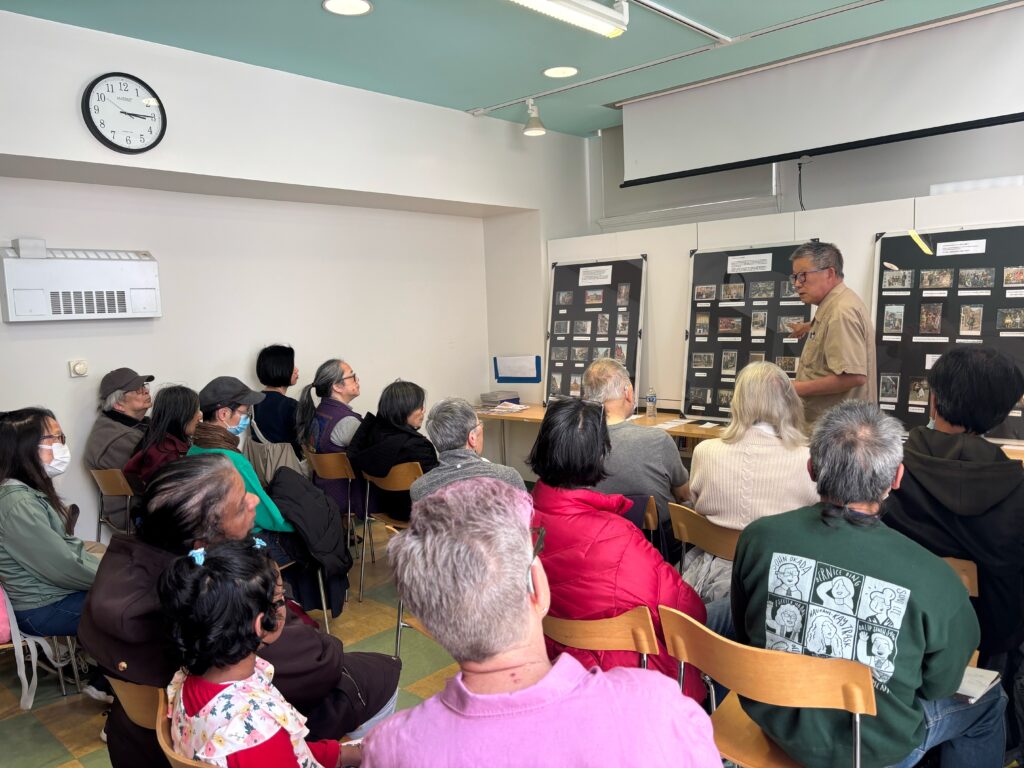
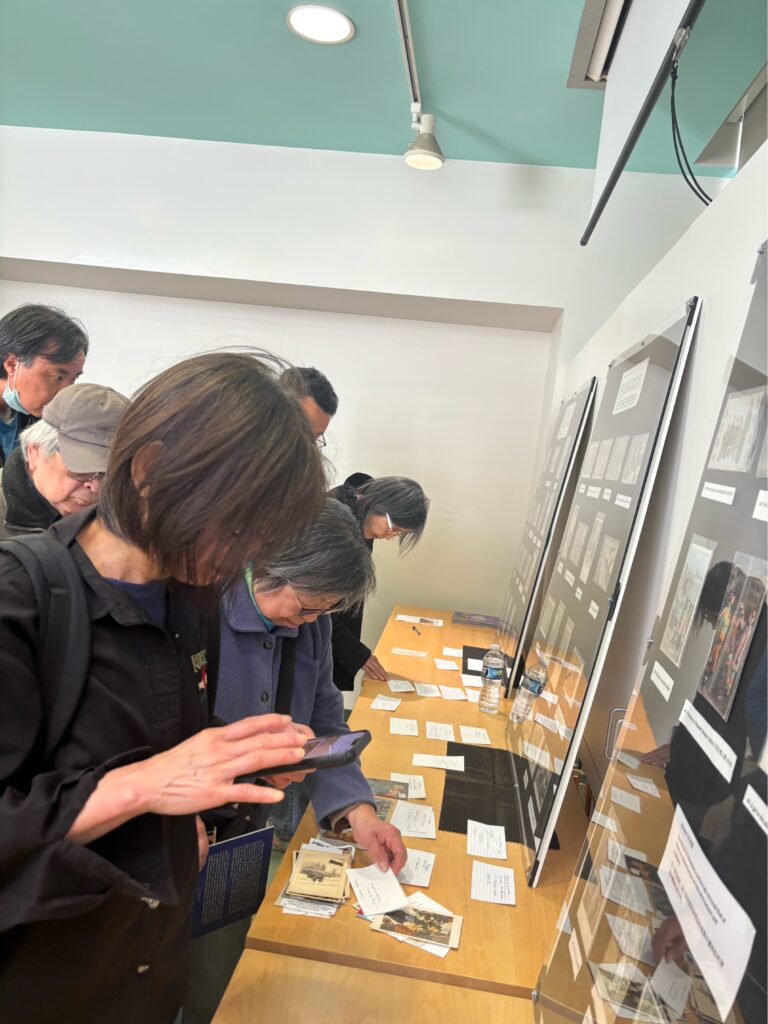
One of his many talents is storytelling. On a foggy Thursday afternoon at the Sunset Branch of the San Francisco Public Library, Herby shared intriguing stories behind the 50 Chinatown postcards that were on display. The postcards were donated from his private collection, on loan from Golden Age Vintage for the month-long exhibition, “Life in San Francisco Chinatown a Century Ago.” Produced between 1903 and 1915, the 50 postcards captured lively scenes from the lives of early Chinese settlers in San Francisco. Herby entertained a crowded room with stories of ambition, celebrations, segregation, and the longing for a new place to call home.
Herby regaled attendees with tales of the cultural and legal challenges early Chinese immigrants faced and eventually overcame. Within the postcards were images of New Year’s celebrations, families dressed in traditional Qing-era clothing for family photos, musicians getting together for a photo op before a gig, and kids playing in bamboo buckets.
Chinese men were allowed into the U.S. as laborers in railroad construction and mining, or as merchants who procured traditional Chinese medicine and other goods from the old country (Chinatown | the Story of Chinatown, 2025). After the 1906 earthquake, the ethnic enclave of Chinatown was entirely demolished. City officials tried to take over the Chinatown neighborhood due to its proximity to the Financial District. With the assistance of a wealthy American-born Chinese businessman, Look Tin Eli, the Chinatown community was able to hang on to their home in San Francisco (Chinatown | the Story of Chinatown, 2025).
Chinatown grew to a center of San Francisco’s Chinese community and later became a boon to the city’s tourism. With financing from businessman Look Tin Eli and the help of a few American architects, Chinatown was rebuilt into a mix of the East and West. Standing at the southwest corner of California Street and Grant Avenue in San Francisco is the Sing Fat Co. Building, a tall pagoda building that transported American tourists who visited Chinatown to an exotic, vision of the foreign land in the Orient.
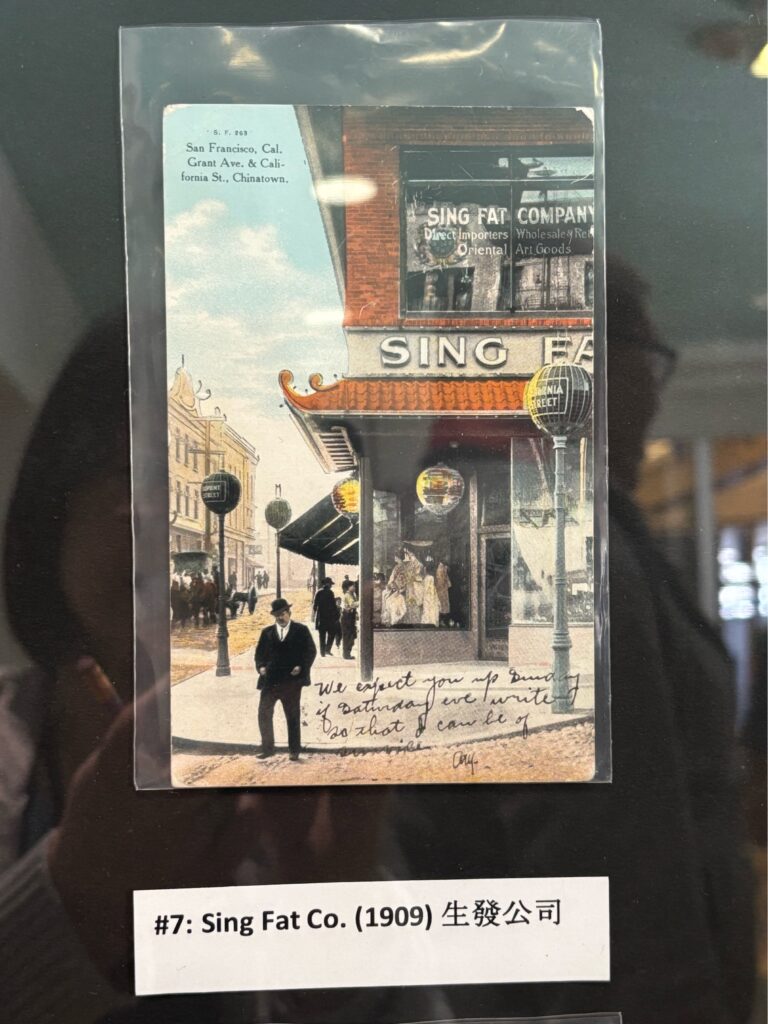
During World War II, China was an ally of the United States. After the war ended, a few more immigrants from China were allowed into the United States (Chinatown | the Story of Chinatown, 2025), but it wasn’t until Congress passed the Immigration Act of 1965 that a significant number of Asians were allowed to enter the United States (Chinese Exclusion Act (1882), 2023). This facilitated the immigration of thousands of new immigrants from Asia and families looking for a new opportunity and a new place to call home.
After the presentation, we were invited to look at the postcards up close and take a closer look at history. To many of the attendees, most of whom were of Asian American descent, the images in these postcards were of familiar faces. They were stories of great struggles and challenges, triumphs and celebrations. Many of them shared with me their own experiences growing up in Chinatown, and they were grateful to Herby Lam for his dedication to preserving the history of the Chinatown community. The private collection and the historical significance of these photos left a lasting impression on Herby’s audience as they cherished the opportunity to gaze into the past of San Francisco’s Chinatown one postcard at a time.
Bibliography
Chinatown | The Story of Chinatown. (2025). Pbs.org. https://www.pbs.org/kqed/chinatown/resourceguide/story.html#mother
Chinese Exclusion Act (1882). (2023, January 17). National Archives. https://www.archives.gov/milestone-documents/chinese-exclusion-ac
Luo, M. (2025). Strangers in the Land. Doubleday.
Writing and photos by Liza Ly, with editing assistance by Emily Espanol
San Francisco Public Library displayed Herby Lam’s collection of twentieth century postcards from May to June 2025.