By Jen Woo, Family Engagement Coordinator, San Francisco Public Library
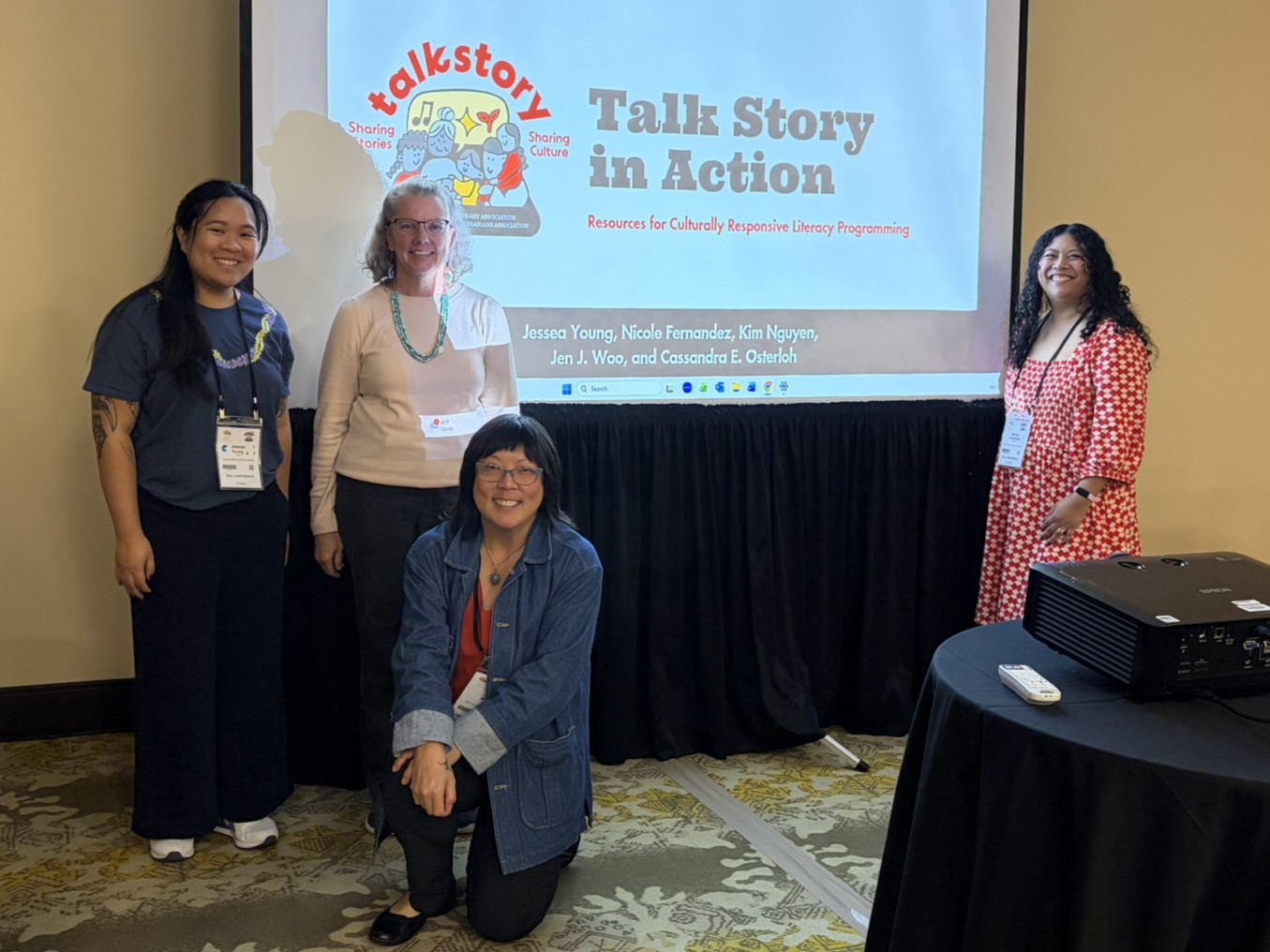
The 2026 CLA Conference session, “Talk Story in Action: Resources for Culturally Responsive Literacy Programming,” presented by Jessea Young (APALA), Nicole Fernandez (APALA) Cassandra E. Osterloh (AILA) and supported by Jen Woo (APALA), highlighted the value of the Talk Story initiative as a framework for creating meaningful, culturally responsive library programs centered on Asian American, Native Hawaiian, Pacific Islander and Indigenous communities.
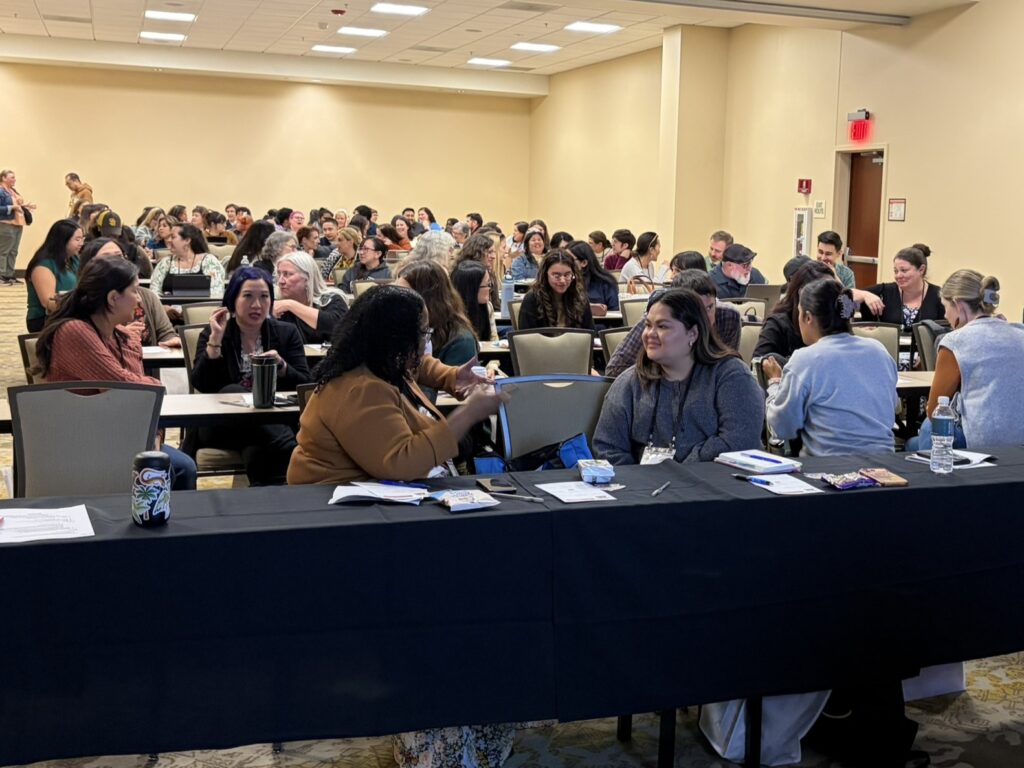
With 115 librarians in attendance, and snacks galore (our favs, popcorn and nori snacks), the presenters introduced a variety of free resources developed through the Talk Story initiative that support librarians, educators, and community partners in fostering literacy, cultural awareness and community connections. These resources include:
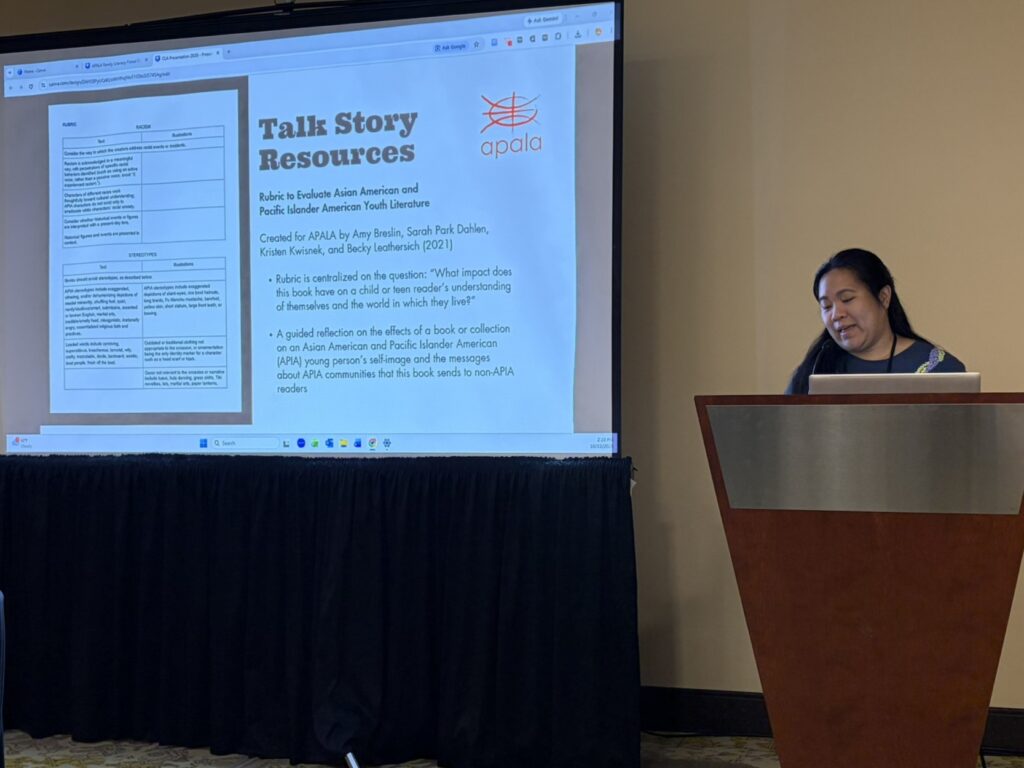
- The APALA Rubric to Evaluate Asian American and Pacific Islander Youth Literature, which encourages thoughtful reflection on how books shape young people’s understanding of themselves and others, with a focus on representation, authenticity and the impact of literature on APIA youth.
- The APALA Best of the Best Book List, an annual curated bibliography featuring outstanding books that highlight Asian American, Native Hawaiian and Pacific Islander experiences and cultures. The list serves as a collection development and programming tool for libraries and educators.
- Talk Story Prompt Cards, multilingual conversation starters available in several languages, including Simplified and Traditional Chinese, Hindi, Marathi, Tagalog and Spanish. These cards support intergenerational storytelling and encourage discussions about identity, family traditions, culture and community.
A significant portion of the session focused on the Talk Story Grant Program, which provides funding for libraries to develop community-centered programs celebrating Asian and Pacific Islander and Indigenous stories and cultural traditions. Presenters emphasized that successful projects should extend beyond a single event by building sustainable partnerships with local cultural organizations, community leaders and knowledge keepers.
Participants were guided through practical strategies for assessing and communicating program outcomes. The presenters shared a framework for measuring impact that considers:
- Reach and participation
- Community engagement
- Learning and cultural exchange
- Relationship building
- Sustainability and long-term outcomes
The session also provided guidance for libraries interested in applying for Talk Story grants. Strong applications were described as those that:
- Demonstrate meaningful community impact
- Incorporate culturally appropriate presenters and partnerships
- Foster intergenerational participation
- Connect clearly to literacy, storytelling, language or learning
- Show strong collaboration with community stakeholders
Through the presentation and discussion with interactive ice breaker and BINGO activity, based on Talk Story prompts, attendees explored ways to adapt Talk Story principles within their own libraries. While the planning involves community members and organizations, librarians shared ideas for their possible Talk Story programs.
Additional resources and grant information can be found at APALA’s Talk Story website and AILA’s Talk Story website.